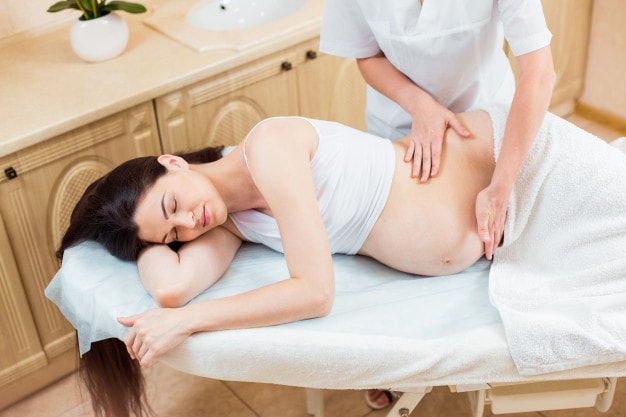
Massage therapy during pregnancy has been shown to provide many benefits, including a sense of wellness, improved relaxation, and better sleep. But certain techniques and trigger points in the body can cause contractions and premature labor, so seeking expertise is vital.
Pregnancy massage is a catch-all term for any hands-on massage during or after pregnancy (prenatal or postnatal massage).
A pregnancy massage typically lasts an hour. Some practitioners use a pregnancy massage table. That’s a table designed to accommodate a woman’s pregnant belly. Others use specially designed pillows called bolsters to position a woman comfortably on her side. This helps especially during the later stages of pregnancy. Lying on your side is often the most comfortable position.
Possible Benefits of Pregnancy Massage
Only a handful of small studies have focused on massage in pregnancy. No definite benefits have been established. But one study at the University of Miami School of Medicine suggests that massage therapy might have multiple positive effects, including:
- Lowered anxiety
- Decreased back and leg pain
- Improved sleep
- Decreased levels of the stress hormone norepinephrine
In another study of pregnancy massage in depressed women, researchers found:
- Increased levels of the “feel-good” hormones serotonin and dopamine
- Decreased levels of cortisol, an indicator of stress
- An overall improvement in mood
Research has shown that, for the general population, massage has other potential benefits. It may relieve pain, or it may boost the immune system’s ability to fight off viruses and tumors
Safe Techniques for Pregnancy Massage
There are more than 80 types of massage taught in roughly 1,300 massage therapy programs in the U.S. Examples of common types of massage include:
- Deep-tissue massage, with firm strokes pressing deep into muscles
- Swedish massage, with long strokes to muscles and attention to joint mobility
- Shiatsu, with pressure and tapping on acupressure points to stimulate the body’s natural energy (called qi)
From a scientific standpoint, the mechanisms that make massage therapy work are still largely unknown. More research is needed to understand how applying different types of manual pressure to the body can:
- Relieve pain
- Stimulate the release of certain hormones like serotonin
- Improve sleep
- Promote the physiological response of relaxation

